
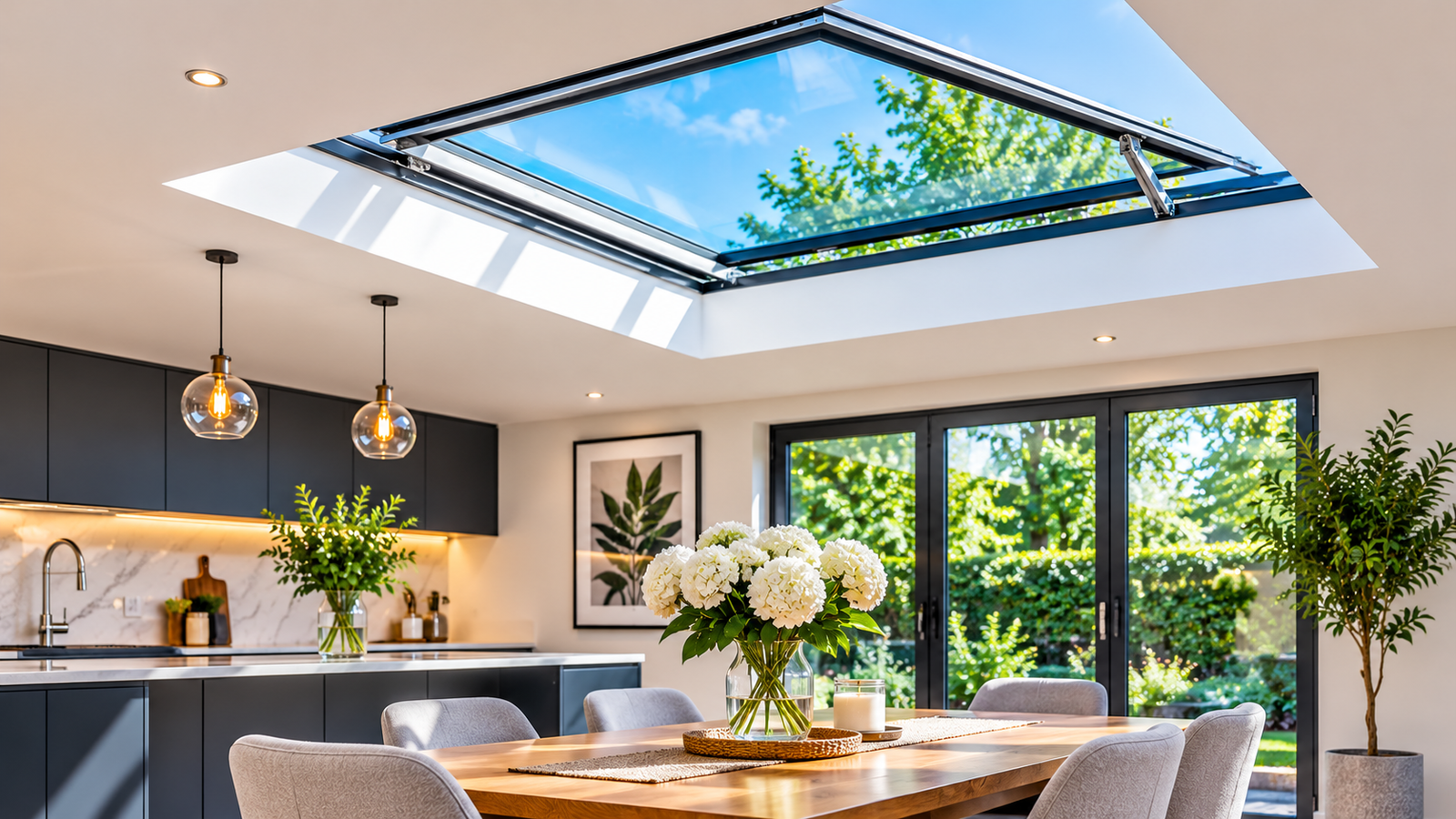

Natural daylight and fresh air can make a noticeable difference to the comfort of an indoor space. Rooms with limited windows often experience poor ventilation, trapped heat and a greater dependence on artificial lighting. Installing opening rooflights provides a practical way to address these issues by introducing daylight and allowing warm, stale air to escape through the roof.
Unlike fixed roof glazing, these systems can be opened to create a direct connection between the indoor environment and the outside air. They are particularly useful in kitchens, loft conversions, extensions, offices and other areas where conventional windows may not provide sufficient ventilation. The right design can also improve the appearance of a building while making everyday spaces more comfortable.
How Roof Ventilation Changes the Indoor Environment
Warm air naturally rises, which means heat often collects near ceilings and upper floors. This can make rooms beneath flat or pitched roofs uncomfortable, particularly during warmer months. Roof windows that open provide an additional ventilation point, helping warm air escape and encouraging cooler outdoor air to enter through lower windows or other openings.
This natural airflow can reduce stuffiness and improve air circulation without relying entirely on mechanical ventilation. It is particularly useful in properties with high ceilings, large extensions and converted lofts.
Ventilation also helps remove moisture produced by everyday activities such as cooking, bathing and drying clothes. Without adequate airflow, excess moisture can contribute to condensation, damp patches and mould growth. A suitable roof ventilation system can help reduce moisture build-up when used alongside appropriate extraction and ventilation measures.
The Benefits of Installing an Opening Skylight
An opening skylight can serve several purposes beyond providing a view of the sky. Its practical value depends on the room layout, roof structure, glazing specification and opening mechanism.
Some of the main advantages include:
1. Better access to natural daylight
Roof glazing introduces daylight from above, making it useful for rooms where side windows are limited. Natural light can reach deeper into certain areas, reducing the need to switch on electric lights during daylight hours.
2. Improved air circulation
An open roof window creates another route for air movement. When paired with suitable windows or doors elsewhere in the building, it can support natural cross-ventilation.
3. Greater indoor comfort
Allowing accumulated warm air to escape can help make upper-floor rooms more comfortable. This can be particularly beneficial in loft bedrooms, home offices and rooms beneath flat roofs.
4. Reduced dependence on artificial lighting
A well-positioned roof window can provide consistent daylight throughout the day. The amount of light entering depends on its dimensions, orientation, glazing and surrounding structures.
5. A more attractive interior
Roof glazing can make smaller rooms feel more open. It can also create an interesting architectural feature in kitchens, living areas and commercial interiors.
Different Opening Mechanisms Available
The opening mechanism affects how easily a roof window can be operated and how suitable it is for a particular room.
Manual Opening Systems
Manual systems are operated using a handle, winding mechanism or extension pole. They are generally suitable for roof windows positioned within comfortable reach.
They offer straightforward operation and do not require an electrical connection. However, accessibility should be considered during the design stage, particularly for installations in high ceilings or difficult-to-reach locations.
Electric Opening Systems
Electric models use a motor to open and close the roof window. They can be controlled through wall switches or remote controls, depending on the product.
These systems are useful for high-level installations where manual operation would be inconvenient. Some models also include rain sensors that automatically close the window when rainfall is detected.
Solar-Powered Opening Systems
Solar-powered models use an integrated solar panel to operate the opening mechanism. They can be suitable for locations where connecting electrical wiring would involve additional installation work.
Their performance depends on the product specification, available sunlight and battery capacity. Homeowners should check the manufacturer’s requirements before selecting this option.
Choosing the Right Glazing for Your Building
Glazing affects thermal performance, daylight transmission, noise reduction and safety. Selecting an appropriate specification is therefore an essential part of planning a roof installation.
Double glazing is commonly used because it provides better insulation than single glazing. Some products also feature low-emissivity coatings, which help reduce unwanted heat transfer.
For buildings exposed to strong sunlight, solar-control glazing may help limit excessive solar heat gain. This can be particularly useful in south-facing rooms or spaces with large areas of roof glazing.
Acoustic glazing may be worth considering for properties near busy roads, airports or other sources of external noise. Laminated glass can also provide additional safety benefits, depending on the construction and application.
The correct specification should account for local building regulations, roof pitch, weather exposure and the intended use of the room.
Important Considerations Before Installation
A successful installation requires more than selecting an attractive roof window. The existing roof structure, insulation, waterproofing and internal layout must all be assessed.
Roof structure: Cutting an opening into an existing roof may require structural alterations. A qualified professional should assess rafters, joists and load-bearing elements before work begins.
Weatherproofing: Flashings, seals and appropriate installation details help prevent rainwater from entering the building. The flashing system must match the roof covering and roof pitch.
Insulation: Poorly insulated roof openings can create cold spots and increase the risk of condensation. Proper insulation around the frame helps maintain thermal performance.
Room position: Consider where daylight will fall and how air will move through the room. Positioning can affect both the usefulness and overall performance of the installation.
Access and operation: The opening mechanism should be convenient to use. Electric or solar-powered options may be more appropriate for windows installed beyond normal reach.
Building regulations: Structural alterations, glazing safety and ventilation requirements may be subject to local regulations. Check the applicable requirements before starting the project.
Where These Roof Windows Work Best
Different building types can benefit from roof ventilation, although the most suitable design depends on the available space and intended use.
- Loft conversions: Roof windows can bring daylight into converted attics and provide an additional source of ventilation.
- Kitchen extensions: Cooking produces heat, steam and odours. An opening roof window can help release accumulated warm air.
- Bathrooms: Additional ventilation can assist with moisture control, although a suitable mechanical extractor may still be necessary.
- Living rooms: Roof glazing can brighten central areas that receive limited daylight through conventional windows.
- Commercial buildings: Offices, studios and other workplaces can benefit from improved daylight and controlled natural ventilation.
In each setting, the size, position and opening direction should be planned around the building’s requirements.
Maintenance That Supports Long-Term Performance
Regular maintenance helps preserve the performance and appearance of roof windows. Leaves, dust and other debris should be cleared from surrounding drainage channels to prevent blockages.
Inspect seals and flashing periodically for signs of deterioration, gaps or water ingress. Damaged seals should be addressed promptly to prevent moisture from reaching the internal roof structure.
Moving components, hinges and opening mechanisms should also be checked according to the manufacturer’s maintenance instructions. Electric and solar-powered models may require additional checks of their motors, sensors and control systems.
Glass should be cleaned using suitable products that will not damage protective coatings or surrounding frame materials. Avoid applying excessive pressure to moving components during cleaning.
Making a Suitable Choice for Your Property
Selecting a roof ventilation system involves balancing appearance, functionality, energy performance and installation requirements. A product that works well in a loft bedroom may not be the right choice for a large kitchen extension or commercial workspace.
Consider the available roof space, desired opening size, ventilation requirements and glazing performance before making a decision. Professional advice can help identify structural limitations and establish the most suitable installation method.
A carefully planned roof window installation can provide lasting improvements to daylight, airflow and indoor comfort. By choosing suitable materials, reliable opening mechanisms and correct installation details, property owners can make better use of their roof space while creating brighter and healthier indoor environments.