

Understanding the Importance of Industrial Odour Control
Maintaining good air quality is an important requirement for industrial facilities, commercial buildings, laboratories, and waste management operations. Various industrial activities release gaseous pollutants that can produce unpleasant smells and affect the quality of indoor environments. These emissions may include volatile organic compounds (VOCs), ammonia, hydrogen sulphide, and other chemical substances that require specialised treatment.
Conventional ventilation and particulate filtration systems may not be sufficient to address these contaminants because gaseous pollutants behave differently from airborne dust and suspended particles. This is where advanced odour control units become important. These systems use specialised chemical filtration technology to capture or neutralise selected gaseous contaminants, helping improve indoor air quality and manage unpleasant odours.
Effective odour management requires an understanding of pollutant sources, chemical properties, airflow requirements, and filtration technology. Selecting the right equipment can help industrial facilities establish more controlled and comfortable working environments.
What Causes Odour Problems in Industrial Facilities?
Chemical Emissions from Manufacturing Processes
Industrial manufacturing involves several processes that can release gases and chemical vapours into the surrounding atmosphere. Pharmaceutical production, chemical processing, fertiliser manufacturing, and petroleum-related operations may generate emissions with strong or persistent odours.
The composition of these emissions depends on the materials used, production methods, chemical reactions, and operating conditions. Some common pollutants include ammonia, hydrogen sulphide, sulphur compounds, and volatile organic compounds.
Identifying the specific contaminants is essential before selecting a filtration solution. Different gases have different chemical characteristics, meaning that filtration media must be selected according to the substances requiring treatment.
See also: How Hybrid Jobs Are Changing the Way People Work
Wastewater and Organic Waste Processing
Wastewater treatment plants, sewage pumping stations, and waste management facilities can generate unpleasant odours during the decomposition and processing of organic materials.
Hydrogen sulphide is one of the recognised contributors to sewage-related odours. Other gases and volatile compounds may also be present depending on the treatment process and environmental conditions.
These emissions can become particularly noticeable in enclosed areas or locations with insufficient air circulation. Properly designed gas-phase filtration systems help manage these pollutants by treating contaminated air before it is discharged or recirculated, according to the system configuration.
How Does Modern Chemical Filtration Technology Work?
Understanding Adsorption and Chemisorption
Chemical filtration is designed to remove gaseous contaminants through interactions between pollutant molecules and specialised filtration media.
Adsorption occurs when gas molecules become attracted to and retained on the surface of a filtration material. Chemisorption involves chemical reactions between contaminants and active substances within the media, helping neutralise targeted pollutants.
The effectiveness of these processes depends on the chemical composition of the filter media, contaminant concentration, airflow, temperature, and humidity. Therefore, selecting the correct media is essential for achieving the intended treatment performance.
Activated carbon and chemically impregnated materials are commonly used in gas-phase filtration applications. Their suitability depends on the type of gases present and the required removal efficiency.
The Role of Honeycomb Chemical Filters
Honeycomb filtration technology uses a structured arrangement of channels that allows contaminated air to pass through specialised chemical media.
This configuration provides a defined airflow path and exposes gaseous contaminants to the active filtration material. As air moves through the honeycomb structure, targeted pollutants interact with the media through adsorption or chemical reactions.
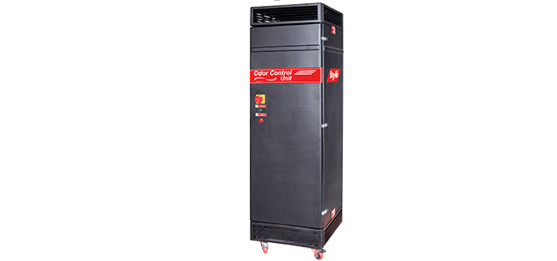
Bry-Air incorporates potassium permanganate (KMnO₄)-impregnated honeycomb filtration technology into its odour control equipment. The design also includes stainless steel filter cassettes and a low-pressure-drop arrangement.
These features support industrial air treatment while providing a replaceable filtration structure for maintenance requirements.
What Are the Main Benefits of an Industrial Odour Control System?
Improved Indoor Air Quality
One of the primary objectives of industrial odour management is reducing gaseous pollutants that contribute to unpleasant smells and indoor air quality problems.
A specialised odour control system can treat selected gaseous contaminants that conventional particulate filters may not effectively capture.
This distinction is important because removing dust and other suspended particles does not necessarily eliminate gaseous pollutants. Combining appropriate particulate filtration with chemical filtration can provide a more comprehensive air treatment approach.
The actual performance depends on pollutant characteristics, media selection, system capacity, and operating conditions.
Energy-Efficient Air Treatment
Energy consumption is an important factor when selecting industrial filtration equipment. Systems with high resistance to airflow may require greater fan power to maintain the desired air circulation.
Low-pressure-drop filtration designs help reduce airflow resistance, supporting more energy-conscious operation.
Bry-Air highlights low-pressure-drop construction as one of the features of its honeycomb chemical filtration technology. However, overall energy consumption also depends on fan specifications, ductwork design, operating hours, and maintenance conditions.
Convenient Maintenance and Filter Replacement
Regular maintenance is essential for maintaining filtration performance. Chemical media gradually loses its effectiveness as it interacts with contaminants, making periodic inspection and replacement important.
Replaceable filter cassettes provide access to the filtration components and simplify maintenance activities. Stainless steel construction also offers a durable framework for industrial operating environments.
Facilities should establish maintenance schedules based on pollutant concentration, operating hours, filter condition, and manufacturer recommendations.
Which Industries Can Benefit from Industrial Odour Management?
Pharmaceutical and Chemical Industries
Pharmaceutical and chemical manufacturing facilities may release different gaseous substances during production, material handling, and processing operations.
Gas-phase filtration can help manage selected chemical emissions and support indoor environmental quality. The filtration media should be selected according to the chemical properties and concentration of the pollutants.
Appropriate ventilation and exposure-control measures must also remain part of the facility’s overall safety strategy.
Wastewater Treatment and Fertiliser Plants
Wastewater treatment facilities and sewage pumping stations frequently require specialised odour management because of gases generated during waste processing.
Fertiliser manufacturing and handling operations can also produce gaseous emissions that require treatment.
Industrial filtration equipment can help reduce selected odorous compounds when correctly designed for the application. Proper airflow management and suitable exhaust arrangements are equally important for achieving effective treatment.
Laboratories and Mortuary Facilities
Animal research laboratories and mortuary facilities may encounter unpleasant odours and chemical vapours associated with their operations.
These environments require careful consideration of ventilation, pollutant characteristics, and exposure-control requirements.
Specialised chemical filtration can form part of an integrated air treatment strategy by addressing selected gaseous contaminants. Equipment selection should consider the specific substances present rather than relying on odour reduction alone as an indicator of air safety.
What Factors Should Businesses Consider When Selecting Odour Control Equipment?
Identify Pollutant Types and Concentrations
The first step is determining which contaminants are present in the air. Businesses should assess chemical composition, concentration, humidity, temperature, and emission patterns.
This information helps establish which filtration media are appropriate and whether additional treatment stages are necessary.
Evaluate Airflow Capacity and Installation Requirements
Airflow capacity should match the facility’s ventilation requirements and contaminant generation rate. Bry-Air’s standard odour control equipment range covers 500 to 2,000 CFM.
Installation planning should consider ductwork, electrical connections, ventilation arrangements, exhaust discharge, and available maintenance access.
Proper positioning is important because the system must receive contaminated air at the required flow rate to deliver the intended treatment performance.
Review Filtration Performance and Maintenance
Businesses should evaluate filtration performance using relevant testing standards and application-specific requirements. Bry-Air identifies ASHRAE 145.2 and ISO 11155-2 testing for its honeycomb filter technology.
Other important considerations include filter replacement intervals, servicing requirements, operating conditions, and technical support availability.
Regular monitoring helps identify changes in airflow or filtration performance and supports timely maintenance.
Why Is Advanced Odour Management Important for Modern Industries?
Industrial air quality requirements continue to make specialised gas-phase filtration an important part of facility management. Conventional ventilation and particulate filtration address certain air quality concerns, but gaseous pollutants often require a different treatment approach.
Chemical filtration technology provides a targeted method for managing selected contaminants through adsorption and chemisorption. When combined with suitable airflow, appropriate filter media, and regular maintenance, these systems can support more consistent industrial air treatment.
Choosing the right equipment requires technical evaluation rather than relying exclusively on odour intensity. Pollutant identification, airflow calculations, installation conditions, and maintenance planning all contribute to long-term system effectiveness.
Conclusion
Industrial odour management plays an important role in maintaining suitable workplace air quality and controlling gaseous emissions. Manufacturing facilities, laboratories, wastewater treatment plants, and other industrial environments require filtration solutions capable of addressing pollutants that conventional particulate filters may not remove effectively.
Advanced chemical filtration technology uses specialised media to target selected gaseous contaminants through adsorption and chemical reactions. Honeycomb filtration arrangements, stainless steel filter cassettes, and low-pressure-drop designs contribute to practical industrial air treatment.
Businesses should carefully evaluate pollutant composition, airflow capacity, filtration requirements, installation conditions, and maintenance needs before selecting suitable equipment. Bry-Air provides specialised odour control solutions designed for industrial and commercial applications.
For detailed product information, technical guidance, and assistance in identifying suitable filtration equipment, businesses can connect with the technical team through the official Contact Us page.